

By Amaya Gayle Gregory Sedona, AZ — If you’re a rare one who is not stressed by these times we’re living through,…
A Sedona Sanctuary of Beauty, Privacy & Possibility – For Sale

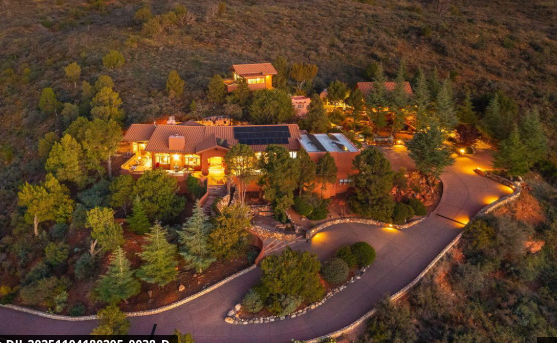
Set against nearly four acres of Sedona’s most breathtaking red rock scenery, Red Rock Retreat isn’t just a property — it’s a living experience waiting for a Sedona home buyer looking for the ultimate experience of living in one of the most beautiful homes in Sedona.

By Steve Segner Sedona, AZ — On Wednesday, December 10, at 2:00 PM, the Sedona City Council will hold a work session…
By Amaya Gayle Gregory Sedona, AZ — If you’re a rare one who is not stressed by these times we’re living through,…
From Friday, November 28th and running all the way until December 30th! Round up the whole posse for our 2025 holiday show!…
By David Stephen On Thursday, December 11, 2025, TIME Magazine is expected to name its person of the year for 2025, with prediction…
PRESCOTT, Ariz. (December 10, 2025) This weekend, December 12 – 13, Yavapai Men’s Basketball and Findlay Hyundai Prescott are hosting the Findlay…
SEDONA, Ariz. – Over the winter break, the city of Sedona’s Parks and Recreation Department will offer Winter Youth Swim Lessons at…
Sedona, AZ — The Jewish Community of Sedona and the Verde Valley, located at 100 Meadowlark Drive off Route 179 in Sedona,…
Prescott, Arizona (Dec. 11, 2025) – Yavapai Education Faculty Program Director and professor Dr. Tara O’Neill, who began as a part-time instructor in…
Sedona, AZ — On Friday, December 5, 2025, Northern Arizona Restorative Justice’s (NARJ) Executive Director, Jeremy Hawkes was honored to be the…
Ambiente’s Sweeping Red Rock Views, Private Saunas and Rooftop Firepits Immerse Guests in Desert Tranquility SEDONA, Ariz – As cooler temperatures transform…
SEDONA, Ariz. – During the holiday season, Sedona Shuttle will operate daily service from Thursday, Dec. 18, 2025 through Sunday, Jan. 4,…
Sedona, AZ — At Tuesday’s December 2nd Sedona City Council meeting, former Red Rock News reporter Tim Perry accused the city’s human…
Sedona, AZ — The Sedona-Oak Creek Airport Authority (SOCAA) is proud to announce that the Sedona Airport collected its greatest number of…
By Alana Lovelace– December 8, 1980 — A Loss That Changed the World For those of us who came of age during…
By Rabbi Alicia Magal Sedona, AZ — The Jewish Community of Sedona and the Verde Valley, located at 100 Meadowlark Drive off…
By Amaya Gayle Gregory — Sedona, AZ — It’s a dream. You’ve heard it said before, whether you believe it or not,…
VVS Board President: Event ‘exceeded expectations’ COTTONWOOD, Ariz. — More than 120 community members supported survivors of domestic violence and sexual assault…
Sedona, Arizona — After nearly 24 years as a trusted voice, advocate, and creative force in Northern Arizona, Allen Elfman is stepping forward with a…
By Steve Segner Sedona, AZ — On Wednesday, December 10, at 2:00 PM, the Sedona City Council will hold a work session…
By Tommy Acosta People have been asking why I haven’t written any articles or opinions for Sedona.biz lately.Honestly? I’m bored. Nothing inspires…
Follow Lee Strobel and director Mani Sandoval on a journey into the miraculous Sedona, AZ — The Sedona International Film Festival is…
By David Stephen It is possible to make the case that no major AI company is on the side of humanity. The…
Prescott, Arizona (Dec. 5, 2025) – Yavapai College’s Director of Radiology Tracy Rogers—herself a graduate of that program in 2016—was living in New…
The Rotary Club of Sedona Village brought holiday cheer to local families through its second annual holiday gift-wrapping event, supporting families in…
The film’s writer/director and producer/actor will host the film and Q&A discussions Sedona, Az — The Sedona International Film Festival is proud…
Prescott, Arizona (Dec. 3, 2025) – Only three years into her job at Yavapai College, Executive Director of Learning and Educational Innovation Robyn…
Sedona, AZ — The Democrats of the Red Rocks (DORR) host a virtual forum “Meet Candidates for the Arizona Corporation Commission” on…
Prescott, Arizona (Dec. 4, 2025) – Former City of Prescott Police Chief and current Yavapai College Program Director for Administration of Justice Studies…
Sedona, AZ — Step back in time this holiday season as The Arts Academy of Sedona (AAS) proudly presents A Vintage Christmas,…
Sedona, AZ — Step back in time this holiday season as The Arts Academy of Sedona (AAS) proudly presents A Vintage Christmas,…
Prescott, Arizona (Dec. 1, 2025) – A funny thing happened to Mike Grady on his way to obtaining his MFA at the University…